China Furniture Market Trends & Insights
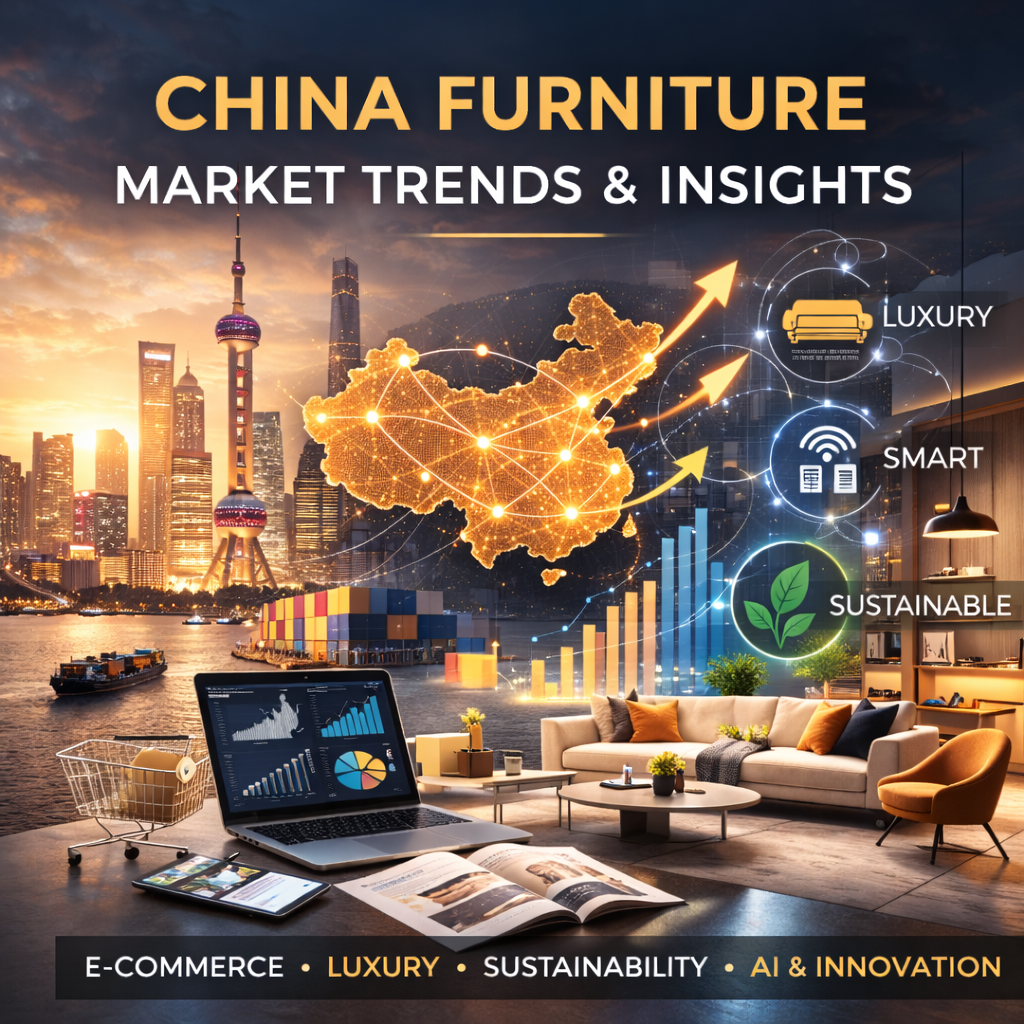
The China furniture market continues to evolve rapidly, shaped by digital transformation, premium consumption growth, sustainability awareness, and AI-driven retail innovation.
For international brands considering China Market Entry, understanding emerging China furniture market trends 2026 is critical. Success depends not only on product quality but on aligning with a localized China Marketing Strategy and structured operational execution.
This article explores the most important trends shaping the future of the industry and how brands can respond strategically through a professional China marketing ops for furniture approach.
Overview: The Current State of the China Furniture Market
China remains one of the largest and most dynamic furniture markets globally, driven by:
- Urban upgrading and renovation cycles
- Growth in high-income households
- Expansion of e-commerce ecosystems
- Rising demand for premium and imported brands
However, the market is also becoming more competitive and digitally complex. Brands must combine long-term China Market Entry planning with adaptive execution and ongoing China Operations Support.
China Furniture Market Trends 2026
Looking ahead, China furniture market trends 2026 indicate several structural shifts:
1. Premiumization & Lifestyle Upgrading
Consumers increasingly prioritize:
- European craftsmanship
- Designer-led collections
- Customized solutions
- Status-driven purchasing
This is driving growth in luxury furniture marketing, especially in Tier 1 and Tier 2 cities.
However, premium positioning requires more than price elevation — it requires refined storytelling and consistent channel control.
2. Digital-First Brand Discovery
Chinese consumers discover furniture through:
- Xiaohongshu lifestyle content
- Douyin short video demonstrations
- AI-driven product recommendations
- Platform search algorithms
A strong China marketing strategy must integrate platform-native content with long-term brand visibility.
Digital ecosystems in China are more closed and platform-centric than Western markets, requiring structured China marketing ops for furniture rather than isolated campaigns.
3. Sustainable & Smart Living
One of the strongest Sustainable/Smart Furniture Trends 2026 includes:
- Eco-certified materials
- Carbon-conscious production transparency
- Smart home integration
- Modular and flexible design
Sustainability is moving from marketing claim to purchasing decision factor.
Brands entering China must communicate environmental credibility clearly within their China Marketing Strategy.
4. AI & Data-Driven Retail
AI-powered personalization is transforming retail experiences:
- Algorithm-driven product recommendations
- AI-generated interior design suggestions
- Predictive customer segmentation
- Intelligent CRM systems
SEO in China increasingly overlaps with AI visibility. Therefore, modern China Operations Support must include data analysis and AI-optimized content structures.
Luxury Furniture Marketing in China
The luxury segment is growing, but it requires specialized positioning.
Key Elements of Luxury Furniture Marketing in China:
- Storytelling focused on craftsmanship heritage
- High-quality visual presentation
- Selective distribution strategy
- Integration of online discovery with offline experience
Luxury consumers expect brand consistency across:
- Tmall flagship stores
- Social media platforms
- Offline showrooms
- Private client communication
A fragmented approach weakens premium perception.
This is where integrated China marketing ops for furniture ensures alignment between digital visibility and retail experience.
Key Challenges for International Brands
Despite strong demand, brands face structural barriers:
- Complex platform ecosystems
- Regulatory compliance
- Trademark protection requirements
- High digital advertising competition
- Distributor misalignment
Without structured China Market Entry planning, these risks increase operational costs and slow growth.
Building a Future-Ready China Marketing Strategy
A modern China Marketing Strategy should include:
1. Clear Market Positioning
Define premium vs accessible segments clearly.
2. Platform Integration
Align Xiaohongshu, Douyin, WeChat, and e-commerce.
3. Sustainable Storytelling
Communicate ESG commitments credibly.
4. Hybrid Distribution Model
Balance online and offline presence strategically.
5. Long-Term Operational Support
Establish consistent China Operations Support rather than project-based campaigns.
The Role of CMO in Navigating Market Trends
CMO (China Marketing Ops) supports international furniture brands by translating global strategy into local execution.
During China Market Entry, CMO provides:
- Market positioning advisory
- Distribution structure planning
- Digital ecosystem setup
- Brand localization guidance
- Data-driven reporting
- Continuous China Operations Support
Rather than operating as a traditional marketing agency, CMO implements a structured China marketing ops for furniture framework that integrates:
- Strategy
- Digital execution
- Channel management
- Compliance coordination
This operational approach ensures that brands remain adaptable to evolving China furniture market trends 2026.
Strategic Outlook for 2026 and Beyond
Looking ahead, successful brands will:
- Embrace sustainability as a core value
- Integrate AI into marketing visibility
- Maintain premium brand control
- Adopt hybrid online-offline distribution
- Invest in long-term localized operations
The Chinese furniture market will reward brands that combine strategic patience with operational precision.
Final Thoughts
Understanding China Furniture Market Trends & Insights is the first step — execution determines success.
International brands must align:
- A structured China Market Entryplan
- A localized China Marketing Strategy
- Sustainable positioning
- Digital ecosystem mastery
- Ongoing China Operations Support
With expert guidance from CMO and a disciplined China marketing ops for furniture framework, brands can transform market complexity into scalable growth in China.