Building Furniture Distribution Channels in China
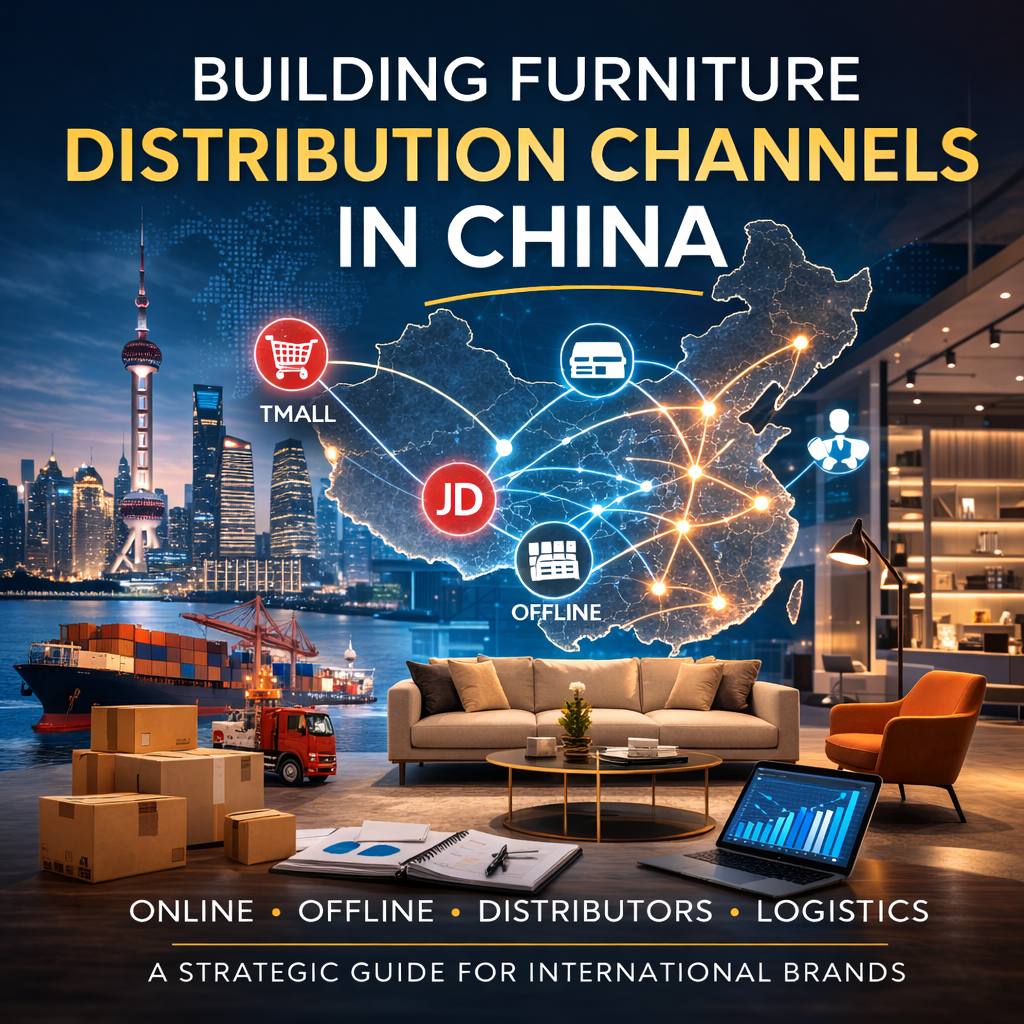
For international furniture brands, building the right distribution structure is the most critical step in a successful China Market Entry.
Many brands assume that entering China means simply signing a distributor or opening a Tmall store. In reality, China Furniture Distribution requires a carefully designed ecosystem that integrates online platforms, offline retail, logistics, brand control, and long-term China Operations Support.
This guide explains how to structure, evaluate, and scale furniture distribution in China using a professional China marketing ops for furniture framework.
Why Distribution Strategy Defines China Market Entry Success
China is not a single-channel market. It is a hybrid ecosystem where:
- E-commerce drives discovery and transaction
- Social media builds brand trust
- Offline showrooms reinforce premium positioning
- Platform partnerships control traffic flow
Without a localized China Marketing Strategy, brands risk overexposure, price chaos, or weak brand positioning.
A well-designed China Market Entry plan must align distribution with:
- Brand positioning (premium vs mass)
- Product category (sofas, custom furniture, luxury items)
- Logistics complexity
- After-sales service capability
This is where structured China marketing ops for furniture becomes essential.
Understanding China Furniture Distribution Models
There are four primary distribution paths:
1. E-commerce Platform Model
- Tmall Flagship Store
- com
- Cross-border e-commerce
This model requires professional Tmall Partner services (TP) to manage:
- Store setup
- Platform compliance
- Paid traffic management
- Customer service
- Logistics coordination
Without experienced TPs, operational inefficiencies quickly damage brand reputation.
2. Distributor & Dealer Network
Traditional distribution remains important for:
- Large furniture pieces
- Project-based sales
- Regional penetration
However, Finding Furniture Distributors in China requires due diligence.
Key evaluation criteria include:
- Financial strength
- Regional coverage
- Existing brand portfolio
- Warehouse capacity
- Digital capability
Blindly signing distributors can lead to loss of pricing control or brand dilution.
3. Hybrid Online-Offline Model
The most successful premium brands combine:
- Online traffic generation
- Offline showroom experience
- O2O conversion tracking
This approach requires careful coordination between digital marketing and physical retail development.
4. Direct-to-Consumer (DTC) Model
Some luxury brands prefer full brand control through:
- Self-operated Tmall flagship
- Owned WeChat private traffic
- Controlled offline experience centers
This requires stronger in-house management and ongoing China Operations Support.
Tmall & JD Partnership Strategies
E-commerce platforms dominate furniture discovery in China.
Tmall Partner Services
A certified Tmall Partner (TP) typically manages:
- Store operations
- Traffic campaigns
- Data analytics
- Customer service
- Warehouse coordination
Choosing the right TP is a strategic decision, not just a technical one.
JD Strategy
JD works well for:
- Standardized products
- Faster logistics expectations
- Price-sensitive segments
The correct Tmall & JD Partnership Strategies depend on brand positioning and operational readiness.
Selling High-End Furniture Online vs Offline
Luxury furniture brands often struggle with channel choice.
Selling High-End Furniture Online
Advantages:
- National reach
- Data tracking
- Content-driven storytelling
- Lower upfront physical investment
Challenges:
- High traffic cost
- Platform commission
- Strong competition
Selling High-End Furniture Offline
Advantages:
- Premium brand control
- Physical experience
- Strong relationship building
Challenges:
- High rent
- Long ROI cycle
- Geographic limitations
The optimal solution is often a hybrid model supported by a structured China Marketing Strategy.
Sourcing Offline Retail Space
For brands entering physical retail, Sourcing Offline Retail Space requires:
- Tier 1 vs Tier 2 city evaluation
- Mall positioning analysis
- Target consumer demographic matching
- Rental cost modeling
- Traffic flow analysis
Premium furniture brands often benefit from:
- Design districts
- High-end lifestyle malls
- Mixed-use commercial complexes
However, real estate decisions must align with digital traffic strategies.
Aligning Distribution with China Marketing Strategy
Distribution is not just logistics. It is brand positioning.
A professional China Marketing Strategy must determine:
- Channel hierarchy
- Pricing consistency
- Digital + offline integration
- Distributor governance
- Performance metrics
Without alignment, distribution fragmentation occurs.
This is where CMO (China Marketing Ops) provides value — integrating strategy with execution.
The Role of CMO in China Furniture Distribution
CMO acts as a structured operating partner during China Market Entry, offering:
- Distribution model design
- Partner evaluation
- Tmall Partner coordination
- Online-offline integration
- Contract negotiation support
- Ongoing China Operations Support
Instead of relying on disconnected agencies, CMO implements a unified China marketing ops for furniture framework.
This ensures that:
- Pricing remains controlled
- Brand identity stays consistent
- Channels scale sustainably
- Reporting remains transparent
Common Distribution Mistakes
- Signing distributors without performance clauses
- Opening Tmall without traffic strategy
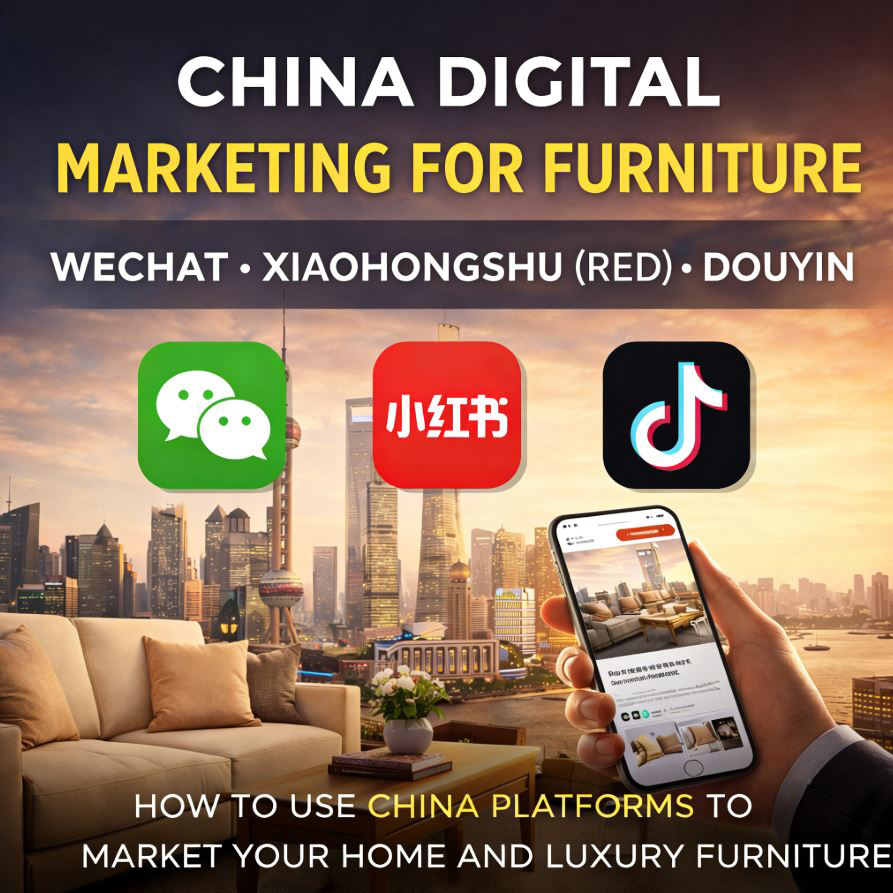
- Ignoring Xiaohongshu and Douyin as traffic drivers
- Over-expanding offline before validating demand
- Underestimating operational complexity
A structured China Market Entry avoids these pitfalls.
Final Thoughts
Building strong China Furniture Distribution channels requires more than partnerships — it requires operational architecture.
Success depends on:
- Clear China Marketing Strategy
- Integrated online-offline planning
- Professional Tmall Partner services
- Strategic Tmall & JD Partnership Strategies
- Careful Finding Furniture Distributors in China
- Data-driven Sourcing Offline Retail Spacedecisions
- Long-term China Operations Support
With the right distribution structure and experienced guidance from CMO, international furniture brands can build a scalable, controlled, and profitable presence in China.